Bilaria Realistic Font
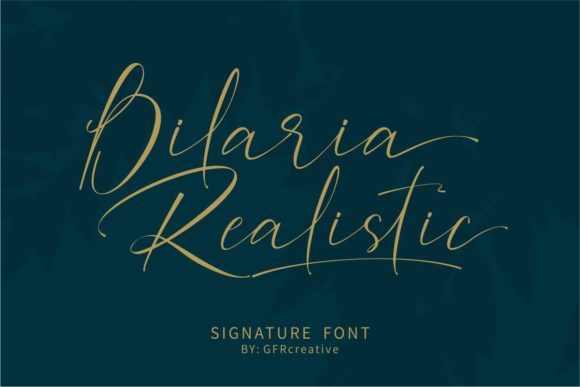
There’s something about the way Bilaria Realistic flows across a candle label that just feels right. I was working on a new line of soy candles, and I wanted the labels to feel soft and inviting, like the scent they hold. That’s when I reached for Bilaria Realistic. It’s a script font with a delicate touch, perfect for adding a personal, elegant flair to handmade products.
The visual personality of Bilaria Realistic is warm and refined. Its curves are smooth, its strokes are light, and it carries a sense of grace that makes it ideal for anything from wedding invitations to printable wall art. It doesn’t shout—it whispers, which is exactly what I needed for my candle labels. The font adds a touch of sophistication without being overwhelming, making it a great choice for any creative project that values style and simplicity.
Using Bilaria Realistic in Handmade Projects
I’ve used Bilaria Realistic on greeting cards, seasonal signs, and even on the tags for my boutique packaging. Each time, it brings a sense of authenticity and charm. For example, when designing a farmhouse sign for a customer, I paired Bilaria Realistic with a simple sans serif font. The contrast made the text pop while keeping the overall design clean and readable.
One of my favorite uses for Bilaria Realistic is on birthday invitations. The font works well with short phrases, names, and titles, giving each card a unique, handcrafted look. I’ve also used it on planner pages and printable wall art, where its elegance adds a refined touch to otherwise minimal designs.
How Bilaria Realistic Enhances Product Presentation
When I first started using Bilaria Realistic on my product labels, I noticed a shift in how customers interacted with my shop. The font added a level of perceived quality that made my items stand out. It wasn’t just about the design—it was about the attention to detail. Customers often mentioned how the fonts on my listings felt more professional and thoughtfully designed.
Brand consistency is important, and Bilaria Realistic has helped me maintain that across all my products. Whether it’s on a tote bag, a mug, or a digital printable, the font creates a cohesive look that strengthens my brand identity. It also helps with customer recognition, as people start to associate the font with my work.
Practical Tips for Using Bilaria Realistic
For those using Bilaria Realistic on cutting machines like Cricut or Silhouette, I recommend testing the font on small stickers or labels before applying it to larger projects. The font is legible at smaller sizes, but it’s always good to check how it looks when cut out. On printed cards or mockup previews, Bilaria Realistic maintains its clarity and charm, making it a reliable choice for any design.
When pairing Bilaria Realistic with other fonts, I usually go for a clean sans serif or a simple serif. This helps balance the script’s delicacy with a bit of structure. For display use, it works beautifully on headings, logos, and decorative wording. However, it’s not ideal for long paragraphs of text, as its flowing nature can make reading difficult over extended sections.
Realistic Examples and Use Cases
One of my recent projects involved creating holiday tags for a small gift shop. I used Bilaria Realistic to write “Merry Christmas” and “Happy Holidays” on each tag. The font gave the tags a personal, handmade feel that matched the shop’s aesthetic. It also worked well on seasonal signs and printable templates, where its elegance complemented the overall design.
I’ve also used Bilaria Realistic on wedding welcome boards and invitations. Its soft, flowing lines add a romantic touch that pairs perfectly with floral or rustic themes. For digital downloads, I’ve included Bilaria Realistic in printable wall art and planner templates, where it enhances the visual appeal without overpowering the design.
Font Considerations and Best Practices
Before using Bilaria Realistic in commercial projects, I always check the font’s licensing terms. It’s important to ensure that the font can be used for physical products, printables, or digital downloads. I also look at the included styles, alternates, and ligatures to see how versatile the font is. These features can make a big difference when designing for different formats.
For multilingual support, I’ve found that Bilaria Realistic works well with most common languages, though it’s always good to test it with the specific text you’ll be using. When working with small text or labels, I keep the font size consistent to maintain readability. It’s also helpful to preview the font in different contexts—like on a shirt or a tote bag—to see how it translates in real-world applications.